Saturday, May 11, 2019

Gojo Ethiopian, Phoenix Food

https://www.gojoethrestaurant.com/

Good Ethiopian food and beer, and for the right price.  Also try the coffee as it is worth the wait!  Overall, the food and flavors were really great.  Like a cultural slice of Ethiopia off Thomas in East Phoenix, we will be going back to enjoy the Meat and Veggies combo and veggie samosa with hot pepper sauce. Check this place out next time you are in Phoenix.

Genfo

Thursday, May 9, 2019

Mogollon Rim and White Mountains Fishing Report Arizona


https://fishaz.azgfd.com/fishingwaters/fishing-report-mogollon-rim-white-mountains/

Angler Report:


Tunnel Lake (Greer)


Steve S. and Ron L. caught 2-day limits on Sunday and Monday at Tunnel Lake near Greer. They were using Powerbait.


Steve with a “big mouthed” and very colorful 16” rainbow.


Ron showing the bigger ones caught on Monday. These trout measured 18” to 15”


They also spotted an array of wildlife: bear, Mexican grey wolf, and lots of elk, deer, and antelope.


Fishing is good at most lakes. All lakes are full from the good winter we had, except for Big, Crescent, and Carnero, which have extremely small watersheds and will take several good winters to fill entirely. The water levels at these did come up substantially but just didn’t fill. But nearly all lakes have been stocked with trout and water quality (and quantity) is good.


Parking lot construction continues at Woods Canyon Lake. The boat ramp is closed until around May 16. George Andrejko/AZGFD


The boat ramp at Woods Canyon Lake is still closed for construction and repaving, and is scheduled to open fully on May 16. Anglers have full access to the shoreline at Woods Canyon Lake and can rent a boat from the concessionaire, just can’t launch their own boat at the ramp yet.


Stocking has started in streams in the White Mountains, including Silver Creek, Little Colorado River in Greer, West Fork LCR at Sheeps Crossing, East Fork Black River and West Fork Black River. Flows are still a little high and cold due to some snowmelt runoff occurring from Mt. Baldy, but all the stocked streams are fishable.
Mike Lopez is AZGFD’s fish program manager out of Pinetop


Hotshot Truck Sleeper Pictures

Image result for hotshot trucking sleeper


Image result for hotshot trucking sleeper


Image result for hotshot trucking sleeper


Image result for hotshot trucking sleeper


Image result for hotshot trucking sleeper


Just some sleeper configurations on different hotshot trucks.  Would be nice to have a spot to sleep to help avoid the expensive hotel rooms, and not having to deal with driving into an urban center. The hotshot truck sleeper allows for convenience and a money saving home away from home on those longer trips.


Jim Harrison "Do Dogs Have Souls?"

via ://lithub.com/do-dogs-have-souls-and-other-questions-from-jim-harrison/

Jim Harrison's Top Ten List

HideReader Bio
Jim Harrison(1937-2016) was an American author known for his poetry, fiction, reviews and essays. He was an extremely prolific writer and man of deep passions – especially for food, wine and cigarettes – as well as a great chronicler of humanity’s relationship with the wilderness. His best known works of fiction include the novels A Good Day to Die (1973), Dalva (1988), True North (2004), and The River Swimmer(2013) and a collection of novellas, Legends of the Fall (1979). His books of poems include Letters to Yesenin (1973), In Search of Small Gods (2009) and Songs of Unreason (2011). His nonfiction includes a memoir, Off to the Side (2002) and collections of his writings on food for magazines including Smart and Esquire, The Raw and the Cooked: Adventures of a Roving Gourmand (2001). 
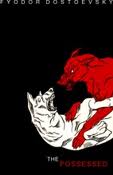
1. The Possessed by Fyodor Dostoevsky (1872). Dostoevsky’s signature theme —the future of morality and the human soul in a Godless world —takes flight in this harrowing portrait of revolutionary terrorists who have surrendered their humanity to their ideals. The political satire throbs with urgency, but Dostoevsky raises this work to the level of art through rich characterizations of his combative principals: the well-meaning, ineffectual philosophical theorist Stepan Verkhovensky; his true-believing, monomaniacal son Peter; the conflicted, ” serf Shatov; and two vivid embodiments of good and evil —saintly Bishop Tikhon and urbane, satanic Nicolas Stavrogin.
2. In Search of Lost Time by Marcel Proust (1913–27). It’s about time. No, really. This seven-volume, three-thousand-page work is only superficially a mordant critique of French (mostly high) society in the belle époque. Both as author and as “Marcel,” the first-person narrator whose childhood memories are evoked by a crumbling madeleine cookie, Proust asks some of the same questions Einstein did about our notions of time and memory. As we follow the affairs, the badinage, and the betrayals of dozens of characters over the years, time is the highway and memory the driver.
3. Wuthering Heights by Emily Brontë (1847). The author’s only novel, published a year before her death, centers on the doomed love between Heathcliff, a tormented orphan, and Catherine Earnshaw, his benefactor’s vain and willful daughter. Passion brings them together, but class differences, and the bitterness it inspires, keeps them apart and continues to take its toll on the next generation. Wuthering Heights tells you why they say that love hurts.
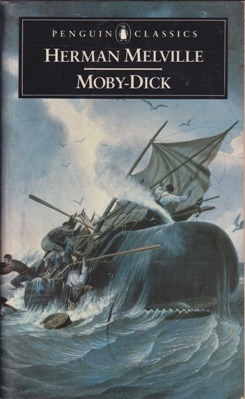
4. Moby-Dick by Herman Melville (1851). This sweeping saga of obsession, vanity, and vengeance at sea can be read as a harrowing parable, a gripping adventure story, or a semiscientific chronicle of the whaling industry. No matter, the book rewards patient readers with some of fiction’s most memorable characters, from mad Captain Ahab to the titular white whale that crippled him, from the honorable pagan Queequeg to our insightful narrator/surrogate (“Call me”) Ishmael, to that hell-bent vessel itself, the Pequod.
5. Ulysses by James Joyce (1922). Filled with convoluted plotting, scrambled syntax, puns, neologisms, and arcane mythological allusions, Ulysses recounts the misadventures of schlubby Dublin advertising salesman Leopold Bloom on a single day, June 16, 1904. As Everyman Bloom and a host of other characters act out, on a banal and quotidian scale, the major episodes of Homer’s ­Odyssey —including encounters with modern-day sirens and a Cyclops —Joyce’s bawdy mock-epic suggests the improbability, perhaps even the pointlessness, of heroism in the modern age.
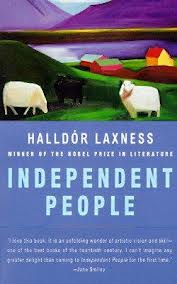
6. Independent People by Halldór Laxness (1934). The Icelandic Nobel laureate’s best novel is a chronicle of endurance and survival, whose stubborn protagonist Bjartür “of Summerhouses” is a sheepherder at odds with inclement weather, poverty, society in particular and authority in general, and his own estranged family. Laxness unflinchingly dramatizes Bjartür’s unloving, combative relationships with his step-daughter Asta and frail son Nonni (a possible authorial surrogate)—yet finds the perverse heroism in this bad shepherd’s compulsive pursuit of freedom (from even the Irish sorcerer who had cursed his land). This is an antihero for whom readers will find themselves cheering.
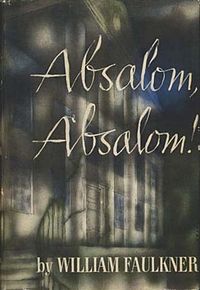
7. Absalom, Absalom! by William Faulkner (1936). Weaving mythic tales of biblical urgency with the experimental techniques of high modernism, Faulkner bridged the past and future. This is the story of Thomas Sutpen, a rough-hewn striver who came to Mississippi in 1833 with a gang of wild slaves from Haiti to build a dynasty. Almost in reach, his dream is undone by plagues of biblical (and Faulknerian) proportions: racism, incest, war, fratricide, pride, and jealousy. Through the use of multiple narrators, Faulkner turns this gripping Yoknapatawpha saga into a profound and dazzling meditation on truth, memory, history, and literature itself.
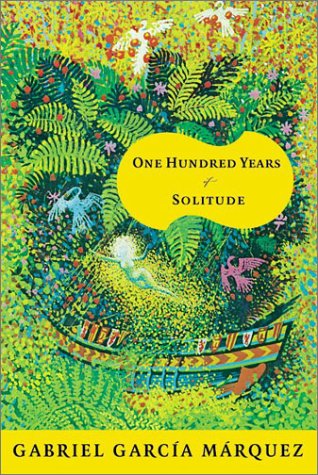
8. One Hundred Years of Solitude by Gabriel García Márquez (1967). Widely considered the most popular work in Spanish since Don Quixote, this novel —part fantasy, part social history of Colombia — sparked fiction’s “Latin boom” and the popularization of magic realism. Over a century that seems to move backward and forward simultaneously, the forgotten and offhandedly magical village of Macondo — home to a Faulknerian plethora of incest, floods, massacres, civil wars, dreamers, prudes, and prostitutes — loses its Edenic innocence as it is increasingly exposed to civilization.
9. Tropic of Cancer by Henry Miller (1934). Banned in America for twenty-seven years because it was considered obscene, this autobiographical novel describes the author’s hand-to-mouth existence in Paris during the early 1930s. A later inspiration to the Beat generation, Miller offers various philosophical interludes expressing his joy in life, hostility to social convention, and reverence for women and sex, which he describes with abandon.
10. The Stranger by Albert Camus (1942). The opening lines—“Mother died today. Or, maybe, yesterday. I can’t be sure”—epitomize Camus’s celebrated notions of “the absurd.” His narrator, Meursault, a wretched little Algerian clerk sentenced to death for the murder, feels nothing: no remorse, love, guilt, grief, or hope. But he’s not a sociopath; he’s just honest. An embodiment of existential philosophy, he believes in no higher power and accepts that we are born only to die. Our only choice is to act “as if” life has meaning and thereby gain some freedom.

Wednesday, December 12, 2018

Southern California Trucking Club Magazine

http://www.truckclubmagazine.com/
Image result for peterbilt

Great all around trucking magazine aimed at drivers and owner operators in the southwest states of AZ, CA, and NV.  It has some great articles and pictures for the truck lover. Also, some of the content is in Spanish, so use google translate to read it in English.


digitial editions:
http://www.truckclubmagazine.com/digital-editions/

Saturday, August 4, 2018

Hot, Arid, Arizona Aquaculture information

Here is some information on aquaculture from the U of Arizona:
Home page of Aquaculture Arizona

ARIZONA AQUACULTURE


+ Aquaculture Teaching, Research, and Extension Activities at the University of Arizona
Information regarding aquaculture courses, including degree program information, faculty research interests, extension activities and documents, and other related information pertaining to aquaculture at the U of A.
+ Arid Lands Fish Production
These are newsletters from the Arizona Aquaculture Association and College of Agriculture. They present basic information on the people, projects and events in Arizona aquaculture.
+ Arizona Aquaculture Association
Information regarding the Arizona Aquaculture Association (Officers, Meetings, Membership, etc).
+ Arizona Fish Farms
This is the list of permitted facilities and transporters from the Arizona Department of Agriculture. It contains the basic information on the licensed farms with their locations, species and contacts.
+ Arizona and other Aquaculture Images
These are photos of aquaculture farms in Arizona, species grown in Arizona, filter systems of interest to farmers, and other images of interest to those interested in aquaculture.
+ American Tilapia Association
Home page for the ATA, devoted to aquaculture of Tilapia.
+ Aquaculture education programs, high schools and Community Colleges
Aquaculture education and aquaculturein the classroom. Also links to FFA aquaculture and other programs.
+ Environmental Research Lab
The ERL Web page is a link to information on aquaculture and other projects conducted by the University of Arizona's ERLab.
+ Links to other Internet aquaculture sites.
Topics include; algae, aquaculture, fish, meetings, tilapia and more.
+ Seafood Health Facts
Maybe the best and most up to date site describing the facts regarding seafood safety and nutritional facts.
+ University of Arizona Aquaculture Faculty and Student Personal Pages
Personal pages and online CVs from faculty and students with interests in aquaculture.
+ World Aquaculture Society
The WAS Web page is another avenue to extensive information on aquaculture around the world.
+ Western Regional Aquaculture Center
Arizona is one of 12 University members of this USDA funded center. Research and extension professionals work with industry members to develop research and extension projects benefitting aquaculture industry in Western states.

Maintained by: Kevin Fitzsimmons -- kevfitz@ag.arizona.eduLast update:Nov, 2012


Link to informative article on Durkee's tilipia operation


and here: https://www.westernfarmpress.com/management/growing-fish-arizona-desert

Sunday, July 29, 2018

Bear attack scene from The Revenant


This movie is a must see, and this scene makes us remember we aren't always at the top of the food chain.  I also have the book by the same name, and it is a great read about Hugh Glass.

Problem After Problem On Steve's 3600km Trip Across Australia | Outback ...


Best show on television. 

Saturday, May 5, 2018

Brainerd, Minnesota Fishing Report: May 4, 2018


BRAINERD/NISSWA AREA


By this weekend, many small lakes and some bays on the bigger lakes should be completely ice-free. As of Tuesday morning, open water was quite evident throughout the area, with Gull Lake being one exception where main-lake ice was still quite prevalent. There should be plenty of water to fish during next weekend’s fishing opener.


S & W Bait & Guide Service/Nisswa Guide League (218) 829-7010