Showing posts with label trucking. Show all posts

Wednesday, May 4, 2016

Single Axle Truck Pictures: What Can Be Hauled with Them?


Single axle Kenworth pulling livestock pups


---The benefits of a single axle truck will be a tighter turning radius, but they are also rougher riding due to the smaller wheelbase.   I saw an LTL single axle pulling a single axle van trailer on my way home from work yesterday, and I started thinking about the options for finding work for that kind of rig. 


Here is a Mack pulling a van


I know the market is overrun with companies like FedEx, UPS, and other LTL Carriers, but I wonder if any opportunities exist in this segment of the transportation industry for LTL owner operators running intrastate?


Single Axle Car Haulers

http://farm3.static.flickr.com/2864/11224191494_b028c89ab9.jpg

http://i.ebayimg.com/images/g/MYIAAOSw~gRVjwSg/s-l300.jpg


Solution to the Trucker Bomb Problem with a portable loo:

Wednesday, February 10, 2016

24 Hours at a Truckstop in Arkansas

(Infographic: Shaye Anderson)

 I enjoyed this informative article about the trucking lifestyle and the challenging way of life that goes with it. 


Link to Article: http://www.psmag.com/books-and-culture/twenty-four-hours-at-a-truck-stop
by Will Stephenson

Excerpt from the article:

5:00 A.M.

“Waking up is the hardest thing,” Joe says, finishing a cigarette in the back parking lot of a truck stop in Caddo Valley, Arkansas. Joe is in his mid-40s, and has driven a truck for 14 years. He’s in the middle of a run from Dallas, where he lives, to Nashville, Tennessee, though his range includes the entire continental United States. He’s almost always in the middle of going somewhere.
His freight might consist of anything, but lately has mostly been water. Forty-five thousand pounds of water. A little while ago, Joe had woken up and taken advantage of his complimentary shower—the truck stop offers showers for every 50 gallons of diesel pumped—when he realized he’d locked his keys in the cab of his truck. That’s why he’s wearing gym shorts and flip flops, his hair tousled and wet, smoking outside in the cold while he waits for dispatch to send help. “Getting up in the morning, starting your day,” he says, “it sucks.”
I’m only here to observe. Truck stops are fascinating, composite places, at once dense and secluded. They’re one-stop shops that are also offices, restaurants, public facilities, and homes. I’m here, maybe unwisely, to see what happens to one of them over the course of 24 hours. The idea is to get a sense of the whole equation, of what these spaces mean to people, how they are used, and how they change over time.

Monday, February 8, 2016

Expedite Truck Sleepers and Pictures


2007 Kenworth

I think a truck like this would be a better investment when compared to vans for expediting. This truck is able to pull up to a dock to load, and can handle more of a payload when compared to other expediting equipment options.

It is for sale at http://www.expeditersonline.com/inventory/listings/trucks/2007-kenworth-t300-26363.php


2009 Freightliner
2009 Freightliner M2106


Sleeper Pics!


Buy the truck here.http://www.expeditersonline.com/inventory/listings/trucks/2009-freightliner-m2106-26348.php

Monday, January 4, 2016

Expert Advice: 8 Tips for Success From Freight Brokerage Owners

Expert Advice: 8 Tips for Success From Freight Brokerage Owners


Article Excerpt:

In Start Your Own Freight Brokerage Business, the staff at Entrepreneur Press and writer Jacquelyn Lynn explain how you can get started in the freight brokerage industry, from your first steps to hiring employees, marketing your business and managing your finances. In this edited excerpt, the authors share information from the trenches about how to survive in the freight brokerage industry.

Nothing teaches as well as the voice of experience. So we asked established freight brokers what has contributed most to their success and what they think causes companies to fail. Here’s what they told us:

Use Advertising and Marketing Techniques that Work

Track your marketing efforts so you can concentrate on the techniques that work and eliminate the ones that don’t.

Smyrna, Tennessee, freight broker Cathy Davis said small giveaway items, such as pens, note pads, caps and T-shirts, work well. Company newsletters with personal and industry information also get a good response. She said donations to fundraising events may be helpful (depending on the event and the degree to which it’s promoted), but the impact of website sponsorships is questionable. She recommended developing a three-panel printed brochure that's easy to include with letters, invoices and checks.

Chuck Andrews, an Indianapolis-based freight broker, builds name recognition by placing periodic ads in association newsletters as well as in annual association and industry directories.
 click the link at the topic of the page to read the entire article

Sunday, January 3, 2016

Palerider's Weekly Trucking Vlog #44-New Year/New Tires/Service


In this episode, Palerider shows the importance of patience in the trucking industry.  I could feel myself getting frustrated while watching the mix ups and disorganization he had to endure on this New Years Eve run from Dallas to Alabama.  It must take the patience of Job to keep quiet when dealing with all of the poor communication found between shippers and dispatchers. I appreciate the great attitude and videos shared by Palerider, a true professional in the commercial trucking industry.

Sunday, December 27, 2015

Expedite Now Trucking Magazine - Perrin Introduces New PowerCube Slim

Expedite Now Trucking Magazine - Perrin Introduces New PowerCube Slim
ALLIANCE, Neb., USA—Perrin Manufacturing – an award-winning engineering firm specializing in the design, testing and building of heating, ventilation and air conditioning (HVAC) systems and auxiliary power units (APUs) for vehicles – unveiled a new, more compact version of its popular PowerCube APU today. The PowerCube Slim packs the same significant HVAC muscle of its predecessor into a thinner profile that fits the mounting space requirements of the majority of North American sleeper cabs. - See more at: http://expeditenow.com/truckgear/401-perrin-introduces-new-powercube-slim.html#sthash.GfT0C2kd.dpuf

Friday, December 25, 2015

Video: Add a Freight Brokerage to Your Trucking Business and Information on Trucking Costs


This video summarizes ways to start your own trucking company.   The commentator asks questions
about what may work in terms of purchasing an existing trucking company.  He is the founder of Atex in El Paso, TX.   He has extensive experience in terms of running a business and really focuses on the ways to add a freight brokerage to your existing trucking company.    He also says most brokers will want 10% to 20% for brokering freight.   I think this may be a good option for owner operators looking to cut out the middle man or woman taking a large percentage due to being a broker.    He also includes a website with more information on trucking costs.   Here is some of the info. from http://atexfreightbrokertraining.com/trucking-costs/
 Trucking Costs
Although freight brokers don’t usually get involved in trucking costs, some own their own trucking business and then supplement their trucking business with freight brokering. Rates and costs are very different between the two. In this topic, you will have a good idea on the trucking costs side of logistics.
First let me say that the examples in this topic are strictly hypothetical. So here we go. ALL trucking costs need to be tracked, not just fuel costs. And these total costs need to be recorded, monitored and analyzed. By knowing your total costs, you can bid competitively rather than out of ignorance or emotion. And you may actually outbid your competitors by knowing your costs and profits.
Here is a formula for cost-based bidding. Again, the following are just hypothetical examples.
Your basic formula is:
Fixed costs
+ Variable costs
= Total Costs
+ Profit
=Gross Revenues
Your fixed costs are those expenses you have even if you are just sitting at home. Fixed costs include:
  • your truck payment,

  • insurance (including health insurance),

  • licenses and permits,

  • accounting and office,

  • plus other required truck costs, and
I’m going to include the fixed portion of the driver’s salary.
Your variable costs are those you have as you are “on the road”. You only incur variable costs when you are moving cargo (or deadheading). So when you are “on the road”, you have both variable AND fixed costs. Variable costs include:
tractor and reefer fuel,
tires,
maintenance and repairs,
telephone,
meals,
lodging,
tires,
tolls,
plus other related costs and
I’m going to include the variable portion of the driver’s salary.

Cold Calling Techniques: How to Get Past Gatekeepers


This video goes over one of the most challenging aspects of brokering freight. It is presented by Caesar Rodriguez, and the information is good for anyone interested in sales and cold calling techniques.
In terms of freight brokering, this is also a very handy and informative video.

Here are some tactics I used to get passed the gatekeeper:

Keep it casual and say, "This is (your first name), can I speak to Charles (Shipping Manager)?

Usual Response:  "We don't have a shipping manager... What is this call regarding?"

"Well, I was hoping to talk to the person in charge of shipping.  Would there be a better time to call back?"

Gatekeeper: "The person in charge of shipping is Tony.   He comes in early in the morning." 

"Okay, thank you I will try back in the morning."


I don't have a great deal of tactics, but I learned a lot from the video above, and from trial and error.


Cold Calling Shippers - Easier Than You Think!: Freight Broker Training


Scott from Transportation Training Group offers ways to handle direct contact with customers. He talks about the realities associated with rejection in terms of cold calling, and the amount of calls it takes to get through. 

Some of the tips he shares:

Stay calm and don't sound like a robot.

Speak to the people like they are your neighbor or a good friend. 

Get on a first name basis with them, and stay relaxed.

Here is more info. from the site:

 Building and effective “Shipper Base” is essential as a freight broker. We teach you all of the techniques for acquiring shippers who will provide you freight opportunities. We also show you how to deal with problematic customers.

We will teach you how to talk to them, the questions to ask and how to negotiate freight rates with them. You can have a “Book of Business” in no time whatsoever

How Top Freight Brokers Make Great First Impressions: Video


This is a longer video by Ted Keyes in which he discusses way to make a great first impression as
a freight broker. The presentation is named: "Connecting with New Customers and Making a Great First Impression."


Here is more info. from his site:

Ted Keyes is dedicated to mentoring freight agents who have not yet achieved their potential. As an active and successful freight agent, Ted’s proven freight agent training and sales system provide a roadmap for what’s working today to grow a profitable freight sales agent business!

More about Ted:
-Athlete and entrepreneur from the last 30 years
-Raised on a Wisconsin farm in a family of 13 kids
-Built a host of successful businesses across the US and Canada

And now, after rising to the top of the leader board at Logistics Dynamics Inc, Ted is revealing his success secrets to a handful of
struggling freight agents.

His coaching, mentoring and training program, along with his proven success system, has helped other freight brokers develop profitable businesses.

How To Become A Licensed Freight Broker With The FMCSA: Hofer Ag. Logistics LLC


How to Obtain Your Freight Broker Authority by Scott Woods

This video goes over how to get Broker Authority.   It is Form OP-1.   It will also get authority for being an owner operator or freight broker.  I would recommend doing your research before signing up for any broker classes, or working for any truck brokerages.   Scams abound in the industry, and I can say this because I was involved in a scam with some brokers.   One of the things that bothered me most about freight brokering is the fact that truckers are usually the ones getting taken advantage of and I wouldn't be able to sleep well at night if I was taking part in shady business practices.  AKA...there isn't a place for me in the world of brokering freight.   The one place I have seen a broker that I would like as a mentor is a small freight broker in Huron, SD.  I watched the video on Hofer Ag. Logistics, and was thoroughly impressed by the ethics, respect, and knowledge of Becky Hofer.   Google Hofer Ag. Logistics to learn more about a great freight broker.

Weekly Trucking Vlog #43-Topeka/Laredo/Home: Palerider


Palerider has a weekly truck video log that I have subscribed to for the last year.  He chronicles his travels across the United States as a trucking owner operator.   He does a great job explaining the trials and tribulations associated with the transportation industry, and his laid back attitude is a great asset to making a successful trucking business.

On this episode he combines his journey from Kansas to Arkansas and back home.  The CB commentary on this episode really cracked me up, and I enjoy the views he shares from the perspective of driving.  Check out all his episodes and enjoy the point of view he shares on these great video logs.

Monday, December 21, 2015

Small Truck and Cargo Van Sleepers

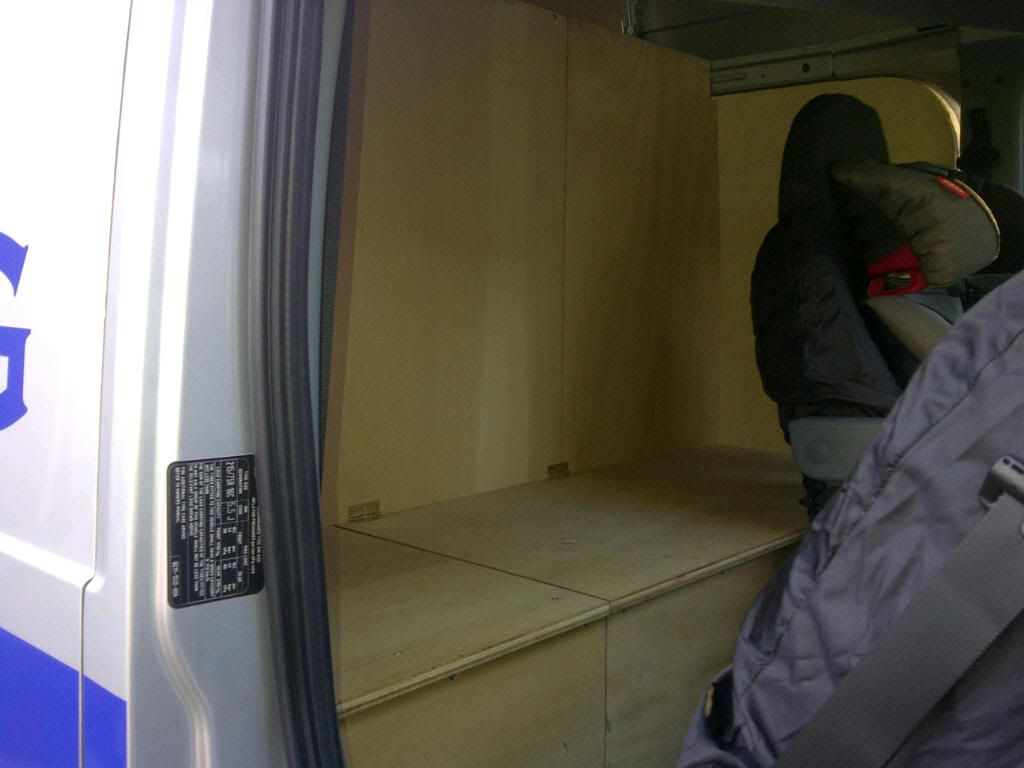
Here are some pictures I have found recently on homemade and factory built sleepers:

http://i1189.photobucket.com/albums/z434/d4rhu/IMG-20110719-00471.jpg
 I am surprised by the lack of information on sleepers for expedite vans in the U.S.  I have found some pictures of homemade sleepers, but there are only a few companies I can find in the United States that make custom cargo van sleepers.


Custom Sleeper with link to company that makes them


In Europe, small trucks are much more common, and I have found some pictures of sleepers made from Lamar that are put onto Fiat Ducato.  I really like the designs and they appear to be taking fuel economy and aerodynamics into consideration.

I would also guess that by the size of the European sleepers, most of the drivers are of smaller stature than their American counterparts.   I saw a program on television comparing the road and trucker foods in different countries, and Japan appeared to have the healthiest truck stops.  Most truck stops in the United States seem to focus on big gulps and all you can eat buffett with extra gravy, but many truckers are trying to do more cooking in their rigs to avoid the unhealthy options found in most American truckstops.

Fiat Ducato with Super Sleeper


 Small sleeper on a small truck. 


More Fiat Sleeper Pictures


Small sleeper

Small sleeper
Small sleeper attached to truck

Wednesday, December 16, 2015

Learning How to Broker Freight with Links


 Brokering freight is a cut throat and highly competitive way of life.  It means spending hours on the phone trying to coordinate the movement of freight with carriers and shippers. I have been researching information on the topic, but for anyone interested in this line of work, it is important to do your research and learn as much as you can from people that are experienced in transportation.  It is a huge industry with its own language, politics, and culture.


Here are some links with free information on Freight Brokering:

Becoming a Freight Broker or Freight Broker Agent PDF from Taltoa

6-things-freight-brokers-love-and-hate link

 How to Start a Freight Brokerage Business via www.entrepreneur.com/

 Broker-startup-guide from DAT

 Here are a few load boards showing available freight and trucks in the agricultural industry:

http://www.livestocknetwork.com/Cattle_Trucks/

https://www.bulkloads.com/

Tuesday, December 15, 2015

Tips for Bull Haulers, Cattle Pots, and Cow Haulers: Safe Cattle Hauling

Tips for Livestock Transport

Excerpt http://www.agweb.com/article/tips__preparation_for_safe_cattle_hauling_naa_university_news_release/
Some helpful tips for hauling your cattle to pasture this summer
.By: Heidi Carroll, Livestock Stewardship Extension Associate, SDSU Extension

Now that pastures are starting to green up and calves are growing, many producers are getting ready to haul their cow/calf pairs to summer pastures. There are multiple factors to consider when transporting livestock and this article will review three of those factors, beginning with stocking density.

The stocking density in trailers is important to maintain cattle well-being and minimize injuries. Table 1 has loading recommendations for various weights of cattle and various trailer sizes. The Gross Vehicle Ratings should not be exceeded for trucks and trailers to ensure safe hauling. The maximum legal load limit must be followed for each state that cattle are being transported through. Additional loading recommendations for cattle pots can be found in the National Beef Quality Assurance Master Cattle Transporter Guide.


Cattle well-being should be maintained during the entire process of transporting cattle, from gathering and loading the animals to unloading. Calm, quiet low-stress handling methods should be used by everyone assisting. Sorting sticks, flags, or paddles can be used to safely sort animals and humanely encourage movement. Electric prods should only be used on stubborn animals and then put out of reach after the animal cooperates. Evaluate the facilities and trailer for distractions if cattle continually balk and refuse to flow easily instead of resorting to excessive electric prod use. A shadow, ground surface color change or a sweatshirt placed on a fence may inhibit cattle movement.

Determine the appropriate weight distribution of cattle for your specific trailer type (gooseneck versus bumper hitch) and the number of compartments within the trailer. When hauling cow/calf pairs, separate the cows from the calves in the trailer to ensure the safety of the calves. When hauling bulls, separate bulls from each other and separate bulls from cows or calves. Bulls unfamiliar with each other should not be mixed on a trailer because damage to the trailer and animals is likely to occur if or when they fight to establish a hierarchy. Horned or tipped cattle should be separated from polled, and space allowance should be appropriate for each group with respect to horn status. Balance the weight to get the best towing performance and smoothest ride. Also be considerate of the route taken and how you drive to prevent cattle from jostling or slipping. Avoid sudden accelerations, stops, or turns and pick roads that have minimal sharp turns or stops. Preparation, attention to detail, and low-stress handling ensures a safe, successful experience when hauling cattle this season.

Safe transportation of cattle starts with proper maintenance of the truck/pickup and trailer. During the busy spring season, maintenance and repairs may get pushed down the list of priorities. However, taking the time for maintenance checks will help things run smoother and safer when you begin hauling cattle.

Maintenance should include:
Inflating tires to the proper air pressure - including spare tires; replace worn or damaged tires
Checking all lights, turn signals, brakes, electrical hookups, and vehicle fluid levels
Greasing hitches and wheel bearings - if required; safety chains, gates and latches are functional and secure
Trailer ventilation or protection are appropriate for current and future weather conditions if travelling long distances
Checking flooring and ramps are safe and have appropriate traction to prevent slips or falls
Cleaning and disinfecting the trailer to prevent transmitting pathogens between cattle and locations; remove all manure and old bedding
Cleaning tires and undercarriage of truck if high risk of disease transmission
Have a safety triangle/cone, tire iron and jack capable of lifting a loaded trailer in case of a flat tire


Performing maintenance checks a few days before cattle are scheduled to be hauled provides time to fix any problems without pushing back the transport date. Maintenance will minimize the risk of devastating accidents that can damage not only the equipment, but also injure or kill livestock.


Hauling cattle to summer pasture is a satisfying task after such a long, cold winter. Take the time to check over trucks and trailers to ensure it goes safe and smooth. Review humane handling methods with family members or employees to minimize the stress on the cattle and prevent injuries.

Monday, December 14, 2015

Pictures of Ice House Truck Sleeper

With the unusually mild fall and winter this year in Minnesota, we are off to a late start for ice fishing.  It is no surprise that many of my friends are anxious to get started on the hard water ice fishing season.   I have built quite a few permanent or framed ice houses in the past, and found that without a trailer chassis they are too much of a bother to take on and off the ice.  They also are prone to freezing on the ice, and most friends only show up when it is on the ice, and disappear in the spring when it is time to take it back off the ice!


Here are some ingenious truck sleeper ice house designs.  

The person selling this house has added some really cool creature comforts.  They left the vents on the truck sleeper, and also have some windows to let in sun light.  The door looks like it is well built and my favorite option is the small wood stove.   I am not sure if the trailer chassis is home built or purchase, but it appears to be a perfect fit for the house. 


Interior pictures of the house.   I like the small wood stove.


Entertainment and a Peterbilt sticker


It appears to be for sale! More info. on this ice house can be found here:
http://fishhouseforsale.com/940-truck-sleeper-wheelhouse/


Friday, December 11, 2015

Priscilla Martin - Rolling CB Interview™


Priscilla Martin.   She is driving a really nice Peterbilt.  She is hauling honeydew and driving a class truck. It is so cool the different stuff drivers can haul with a reefer trailer. It is also amazing the amount of dedication and sacrifice professional drivers emanate in this profession. Sounds like a good part of owner operator trucking is being diversified in what you can haul based upon the supply and demand.  Trucking is one of the last independent American jobs, and it is a lifestyle I wish more of the general public would learn about.  The videos are produced by Chris Fiffie.
Chris Fiffie, multimedia specialist, does a great job documenting the trucking lifestyle! Show respect to truckers out on the highways.  Happy Holiday and God Bless!

Paid Truck Driver Training: USA Truck hires 21 year old trainees!

Link to USA TRUCK
The trucking industry needs new drivers to keep up with the freight demand.  Actually, the issue isn't that simple, but I have noticed some of the larger companies have now lowered their hiring age.  I also follow quite a few trucking Vlogs on youtube.   Some of the online video journals are produced by younger drivers, and they can be a great resource for anyone considering the trucking career and lifestyle.
 Popular Vlogger and trucker Allie Knight began her driving career at USA truck.   You can follow her journey by going to her Youtube Site, and starting with her earliest videos.

 USA Truck offers paid training.  As with any company sponsored training program, it is important to do your research and find out the penalties of not completing the contract, or leaving school early. Check out Driver Solutions, and compose a list of questions to ask the recruiter.   I think it is a good idea to base the questions on the worst case scenario, as it is better to know the consequences beforehand, especially when they are monetary.

 They also offer programs for recent CDL graduates.


Here is a video overview of the training program at USA Truck.

Wednesday, December 9, 2015

Midwest Coast Transport: Paid Truck Driver Training


Visit http://www.joincomcar.com/our-carriers/mct-company-drivers/# to apply!

Hiring Area Map
Info. via http://www.joincomcar.com/our-carriers/mct-company-drivers/#

  • Paid orientation, 2 ½ days, $250
  • Advanced Driver Training Program (ADTP), Friday – Thursday, $100/day
  • Driver training lasts 3 weeks, $500/week. After driver training, you’ll be assigned your own truck and transition from training to mileage

  • We offer one of the most comprehensive—and paid—training programs in the trucking industry. Travel assistance, lodging and some meals are provided during orientation and ADTP.
    Orientation takes place in Atlanta, GA and Sioux Falls, SD.
    If you attended another school, you could qualify for our up to $6,000 in tuition reimbursement paid within 25 months.

    Thursday, December 3, 2015

    Hauling Cattle as a ... | Beef Cattle | Agriculture

    Hauling Cattle as a ... | Beef Cattle | Agriculture


    Hauling Cattle as a Business

    Beef InsiderUpdated: 02/09/2015 @ 2:30pm
    By: Raylene Nickel
    Since moving into semiretirement after selling their cow herd and farmland, Waldo and Kathy Westrum of Turtle Lake, North Dakota, now focus on their side business: custom-hauling cattle. With the purchase of a new trailer, their client base and service area has expanded, doubling their cattle-hauling miles.
    “Custom-hauling cattle is a good side business for a ranch because it provides cash flow,” says Waldo. “The extra income the business earns helps justify the purchase of a good stock trailer for our own ranch use.”Waldo bought his first gooseneck trailer for hauling his own cattle back in 1992. Soon after, neighbors began asking him to haul their cattle. The business grew from there.
    The Westrums’ new, custom-built trailer plays a key role in the present growth of their business. They took what they learned over many years of hauling and ordered a custom-built trailer that increases the ease of loading cattle.
    The following specialized features reduce their stress and labor, and help minimize breakdowns.

    • Steel construction. Relative ease of repair figured in their decision to buy a trailer constructed of steel rather than aluminum.

    “If we have to repair a steel sidewall, for instance, this can be done at a regular welding shop,” says Waldo. “Repairs to aluminum have to be done at a specialized shop.”

    • Heavy-duty undercarriage. The 34-foot-long trailer has three axles, each rated at 8,000 pounds. Wheels are heavy-duty, and the tires are 14 ply.

    “This gives us good carrying capacity, and we’ve got more stopping power with the bigger brakes,” says Waldo. “Tire blowouts are common with stock trailers, but we’ve only had two flats in the last 26,000 miles. Those resulted from two small nails we happened to pick up.”

    • Two-speed gearbox on the jack. Because the steel construction increases the weight of the trailer, the Westrums added a two-speed gearbox to the jack. The gear reduction makes it easier to crank the jack to lift the hitch out of the pickup bed.

    • Double-wall design. Smooth interior walls are easy to clean and reflect light, brightening the interior. Outside walls are of horizontally designed construction materials, which tend to deflect gravel.

    “Vertical structures on the outside catch rocks and chip the paint, giving rust a place to get started,” says Waldo. The trailer interior is 80 inches wide with straight sidewalls all around.

    • Light interior. The interior and the exterior of the trailer are painted white. “Cattle are easier to load into a trailer that’s light inside rather than dark,” notes Kathy.

    • Rubber flooring. At the factory, the floor of the trailer was coated with a ½-inch layer of a material made from recycled rubber. “It adds a layer of cushioning to the floor that makes it more comfortable for the cattle to stand on,” explains Kathy. “It’s easy to clean.”