Showing posts with label literature. Show all posts

Monday, January 18, 2016

Reading Pulp Fiction Online with Links

http://www.blackmaskmagazine.com/notchedgun.html Walt Coburn

Library of Congress Pulp Fiction

Pulp Magazines Project

From the site:
The Pulp Magazines Project is an open-access archive and digital research initiative for the study and preservation of one of the twentieth century's most influential print culture forms: the all-fiction pulpwood magazine. The Project also provides information and resources on publishing history, multiple search and discovery platforms, and an expanding library of high-quality, cover-to-cover digital facsimiles.

Sunday, December 20, 2015

Teachers Pay Teachers: Links to Using Podcasts in the Classroom

New Year, New Routine - Looking Forward to 2016 | Teachers Pay Teachers

I taught English for quite a few years, and I was always looking for new ideas to help engage my students.  I  get email updates from quite a few teacher websites, and I always find the info. from Teachers Pay Teachers to be helpful.

The site uses tips from teachers around the United States, and I like this latest information because of the podcast suggestions, such as  lets-podcast/, and other info. from a teachers utilizing podcasts in the classroom.   I follow many podcasts, and really like the way this free source of communication can help students and teachers learn new things.


Links to using podcasts in the classroom:

University of South Florida: Using Podcasts in the Classroom

From: http://www.edtechnetwork.com : Educational Podcasting

Tuesday, June 30, 2015

Author Tom Robbins: Interviews and Links

Tom Robbins Link Historylink.org-Article about Tom Robbins that includes his early years, the individual books he has written, and a plethora of other information. It is by By Michael Hood, May 15, 2003.*


*Licensing: This essay is licensed under a Creative Commons license that encourages reproduction with attribution. Credit should be given to both HistoryLink.org and to the author, and sources must be included with any reproduction. Click the icon for more info. Please note that this Creative Commons license applies to text only, and not to images. For more information regarding individual photos or images, please contact the source noted in the image credit.


A Letter from Tom Robbins and the importance of connecting via:
http://lifedonewrite.com//reached-tom-robbins-look-happened-benefits-connecting-someone-havent-never/

Great quotes from one of Tom Robbins novels:
quotes from-still-life-with-woodpecker via goodreads


Monday, April 20, 2015

How to Write a Mystery Novel Link and Iron Lake by William Kent Krueger Symbols

windigo
I found this Link to Random House, "How to Write A Mystery Novel", and found it to be quite an interesting formula.  I just finished reading "Iron Lake" by William Kent Krueger and was very impressed with the format of the mystery novel.  I was also impressed by the setting. WK Krueger is a Oregon native but has been living in St. Paul for many years.  He has definitely done his research concerning Minnesota and how to incorporate symbols from the state into his writing.  "Iron Lake" is his first novel in the Cork O'Connor series and it is filled with many elements that will appeal to readers interested in learning about Minnesota. He write about many Ojibwe beliefs and does a great job at creating diverse American Indian characters.

He begins the novel with a mystery but also gives readers some background concerning the main character Cork.  Cork grew up with a very wise American Indian elder to guide him in the ways of the woods. This character also teaches him about the mysteries associated with the Minnesota forest, and the windigo element that continues throughout this novel.

Other Ojibwe American Indian symbols found in this book:
Sweat lodge, Sauna, genocide, gambling, buffalo, casino, hunting, courage, bravery

Witch Tree
Medicine Man-Midewiwin
Check out this introduction to Ojibway Culture and History page for more information.

Saturday, August 23, 2014

Tom Robbins quote on happiness from "Another Roadside Attraction" novel

Tom Robbins photo from slate.com

Tom Robbins Another Roadside Attraction quote:
“The most important thing in life is style. That is the style of one's existence the characteristic mode of one's actions is basically ultimately what matters. For if man defines himself by doing then style is doubly definitive because style describes the doing. The point is this happiness is a learned condition. And since it is learned and self generating it does not depend upon external circumstances for its perpetuation. This throws a very ironic light on content. And underscores the primacy of style. It is content or rather the consciousness of content that fills the void. But the mere presence of content is not enough. It is style that gives content the capacity to absorb us to move us it is style that makes us care.”


― Tom Robbins, Another Roadside Attraction

Thursday, August 21, 2014

Life Lessons from author Jim Harrison/ Esquire


Good list of Jim Harrison's life lessons. His novels are great and he appears to be a tough, and very prolific, writer.

Article is from Esquire.com


Published in the August 2014 issue


I don't see any evidence of wisdom accelerating as you get older. Old people will say it does, but they're generally speaking full of shit.


Given free rein, our imagination can get infinite.


A couple of weeks before she died, my mother—so old and sweet—said, "You've made quite a good living out of your fibs."


I'd gone to Granada to see where Lorca was murdered on the mountainside by the Franco people. That Franco was a wicked cocksucker, but they certainly never bothered killing poets in America.


Legends I wrote in nine days. But that's the only time it ever happened that well. It was like taking dictation … but it was after I'd thought about the story for five years.


I won't even talk to young writers anymore unless they can give me a good reason. I say, "I don't have any time to talk to you unless you intend to give your entire life over to it, because it can't be done otherwise."


Once in twenty years we've had here [in Arizona, where he has a second home] the elegant trogon. It looks sort of like a paint-by-number bird. Very rare bird. You're always so pleased when you have a rarity in your front yard.


I probably wouldn't have been a poet if I hadn't lost my left eye when I was a boy. A neighbor girl shoved a broken bottle in my face during a quarrel. Afterward, I retreated to the natural world and never really came back, you know.


It's just like when I was twenty and my father and sister got killed in a car accident. I thought, If this can happen to people, you might as well do what you want—which is to be a writer. Don't compromise at all, because there's no point in it.


If all I did was answer the correspondence I get, that would be my job.


It's like hunting with Mario Batali. He checked his fancy phone and said, "Fuck. I've got 280 e-mails." And I said, "What do we do now?" And he said, "Nothing" and put it in his pocket, and we went hunting.


I don't hunt mammals. My friends all do. I love antelope and elk, but I depend on the kindness of friends, because I shot a deer when I was young and it was very unpleasant.


Unlike a lot of writers, I don't have any craving to be understood.


They published my Fireflies in The New Yorker, and they took a sex scene out of it, which irked me at the time. I said, "That was evidentiary to her character!" She's got to get laid like anybody else at some point.


I don't know if it was writer's block or if I just didn't have anything I wanted to say.


Fifty-four years later and we're still married. Very few keepers like that.


The interesting thing about Nicholson is his inability to lie about anything. It just doesn't occur to him to lie, and that's a rare actor.


It's overwhelming when you know Indian history. What fuckin' assholes we were for so long.


The reason why writers go out to Hollywood is to get some money. Which I still found preferable to teaching. If I can write a screenplay in two months and it pays what I would earn teaching for a year and a half, why not?


I revere bears. I had a big male bear that I used to leave extra fish about a hundred yards from my cabin. I'd leave the fish on a stump and the bear would eat them. When I would come home from the bar, sometimes he would stop me and I would roll down the window, and he would set his chin right on the doorjamb and I'd scratch his head—but that's stupid.


I work every morning, all morning, sometimes in the afternoons. Then sometimes I hunt in the afternoons—quail, doves, grouse up north—but just to stay alive, because writers die from their lifestyle but also from their lack of movement.


If you've written all day, you don't want to talk about it at the bar.


My grandmother lived to be ninety-seven, and I would carry her in and out of the house because she was arthritic and I was real strong then. Grandma said, "This has gone on too long, Jimmy." Ain't that a great thing to say?


All people disappear.


I didn't want to die on the Warner lot.


Has happiness changed with age? Yes, I expect less of everything.


No conclusions on time. Other than the old beginning, middle, and end.


You end up missing your dogs.


What's the meaning of it all? Seems to me nobody's got a clue. Quote Jim Harrison on that: Nobody's got a clue.


Now, where did I put my cane?

Online Exclusive: Squirrel Recipes | Field & Stream: Larry Brown Author


Author Larry Brown's Squirrel recipe on F and S.Online Exclusive: Squirrel Recipes | Field & Stream

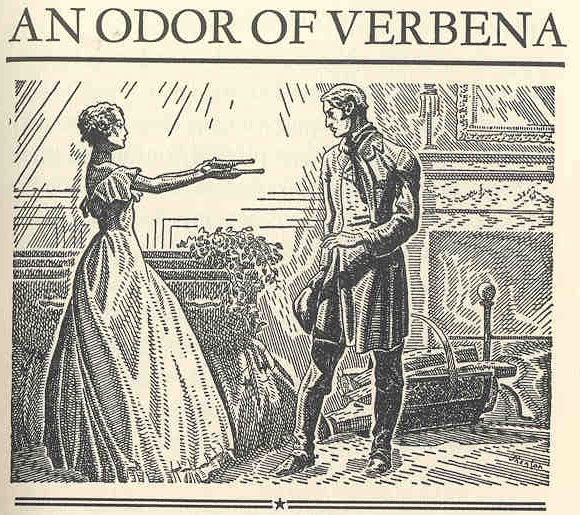
William Faulkner's "An Odor of Verbena" allusion, narrative style, and eternal verities


Link to William Faulkner's: "An Odor of Verbena" pdf.via aculty.weber.edu/

One allusion Faulkner uses in this short story, is from the Bible:

Matthew 26:52 New International Version (NIV)
52 “Put your sword back in its place,” Jesus said to him, “for all who draw the sword will die by the sword."

Allusion and other italicized parts the story:
"Who lives by the sword shall die by it..."(Faulkner 214).
"At last it has happened" (Faulkner 214).
"At least this will be the chance to find out if I am what I think I am or if I just hope; if I am going to do what I taught myself is right or if I am just going to wish I were..."(Faulkner 215).


This story speaks to the "eternal" verities of the past, which leads me to think about the teachings in Faulkner's writings.
Faulkner's story is set in Mississippi, and takes place in the post Civil War Deep South. His vocabulary is amazing, with words like "presentiment", interwoven with concise and tension filled dialogue. The story also contains a common element of Faulknerian writing, which can be very disorientating, but also attractive over time; Faulkner's stories jump from past to present and blend these elements in a way that makes it all seems to morph together into the author's myopic dream vision perspectives of past occurrences and their effects on the present. This vision, which was fueled by large amounts of bourbon, horse back riding, and sitting on country porches slinging hunting stories, make the writer and his work classic.

Wednesday, August 20, 2014

"Advice From Artists on How to Overcome Creative Block": by Maria Popova via dailygood.org


I was just thinking about the great things associated with good news, in sharp contrast to the gossip, and bad news following celebrities, and professional athletes, the stuff usually shown in the media. 
I found this site posted by a friend, and I am finding it a great place to visit daily, between writing breaks, or just to take some time to reflect on good news. Good news and solutions are much more appealing than the gossip, complaints, and violent crime focused upon by the media conglomerates.
I don't watch any regular news anyway.  I read the paper, but this site is a new's source I now follow:
 

Here is more about the site: link to source 

About Us


DailyGood was born in 1998, when one college student started sharing inspiration with a half a dozen of his friends by sending them an enriching quote every day.

Today, DailyGood leverages the internet to promote positive and uplifting news around the world to more than 100,000 subscribers through the daily and weekly newsletters. Readers receive a news story, an inspiring quote, and a suggested action that each person can take to make a difference in their own lives and the world around them.

Often times, watching the nightly news and reading mainstream newspapers it's hard to remember the presence of good in the world. And yet it is constantly around us. The world is full of everyday heroes and true stories of transformation. They have helped sustain life down the ages in a multitude of ways, small, simple and profound. DailyGood aims to shine a light on these stories and in doing so to change the nature of our conversations. If it can spread a few smiles along the way it's purpose is served.

Our philosophy is quite simple: "Be the change that you wish to see in the world." The entire project is fully run by dedicated volunteers who contribute hundreds of hours finding the right stories and quotes. All of our content is distributed and syndicated for free. We don't advertise or promote any products. We don't ask for anything with the trust that whatever is needed will come.

And in the end, we are thankful that so many benefit from DailyGood because it gives us a meaningful opportunity to serve.

Thank you for your partnership in spreading the good.

The DailyGood Team

Zen Koan

good living...zen cabin in paradise

"Dogen Zenji's Genjo-koan Lecture (8)from here
Rev. Shohaku Okumur

Director, Soto Zen Education Center


(Text: section 9)

"When a person attains realization, it is like the moon reflecting on the water. The moon never becomes wet; the water is never destroyed. Although it is a vast and great light, it reflects itself on a small amount of water. The whole moon and even the whole sky reflects on even a drop of dew on a blade of grass, or a single tiny drop of water. Realization does not destroy the person, as the moon does not make a hole in the water. The person does not obstruct realization, as a drop of dew does not obstruct the moon in the sky. The depth is the same as the height. [In order to investigate the significance of] the length and shortness of time, we should consider whether the water is great or small, and understand the size of the moon in the sky."

Kinda hard to get my head around this koan, but many of the images, created by the writer, are amazing.

I like the analogies, and the way the elements are often referred to in these short Zen reflections and stories. They all contain lessons, but sometime it takes me a while to find the message.

Bradley's Blog : Crack The Spine: "Crack the Spine loves the writte...

Bradley's Blog : Crack The Spine: "Crack the Spine loves the writte...: I submitted four, short fictional works to this publication today:  http://www.crackthespine.com/p/current-issue.html .  Here is some inf...

Crack The Spine: "Crack the Spine loves the written word"


I submitted four, short fictional works to this publication today: http://www.crackthespine.com/p/current-issue.html.  Here is some information from the site about CTS:

ABOUT
Contact
Subscribe to our Weekly Newsletter
Submissions - Please review our Submission Guidelines
Advertising - See our Advertising Page
General Inquiries - Kerri Farrell Foley, Editor

Who We Are
Crack the Spine loves the written word. Some might say we're in love with the written word. But that's just a silly rumor. We publish diverse and sharp literary works, including flash fiction, micro-fiction, poetry, short stories, personal essays, and book reviews. We don't care if it's four words or four thousand words, if it's charged with artistry, we want to publish it. Given the choice, we will always select madness over method.

What We Do
Crack the Spine publishes an online digital magazine weekly. Works published online are automatically eligible to be selected for later publication in our quarterly print anthologies. If you're interested in submitting to Crack the Spine, review our submission guidelines.

Crack the Spine Literary Magazine is owned and published by Crack the Spine Press, LLC." Quoted from http://www.crackthespine.com/p/about.html.

They have a nice site, and you can read the current issue online, if you like to go on literary benders, or just want to read a good short story, I highly recommend the CTS site.